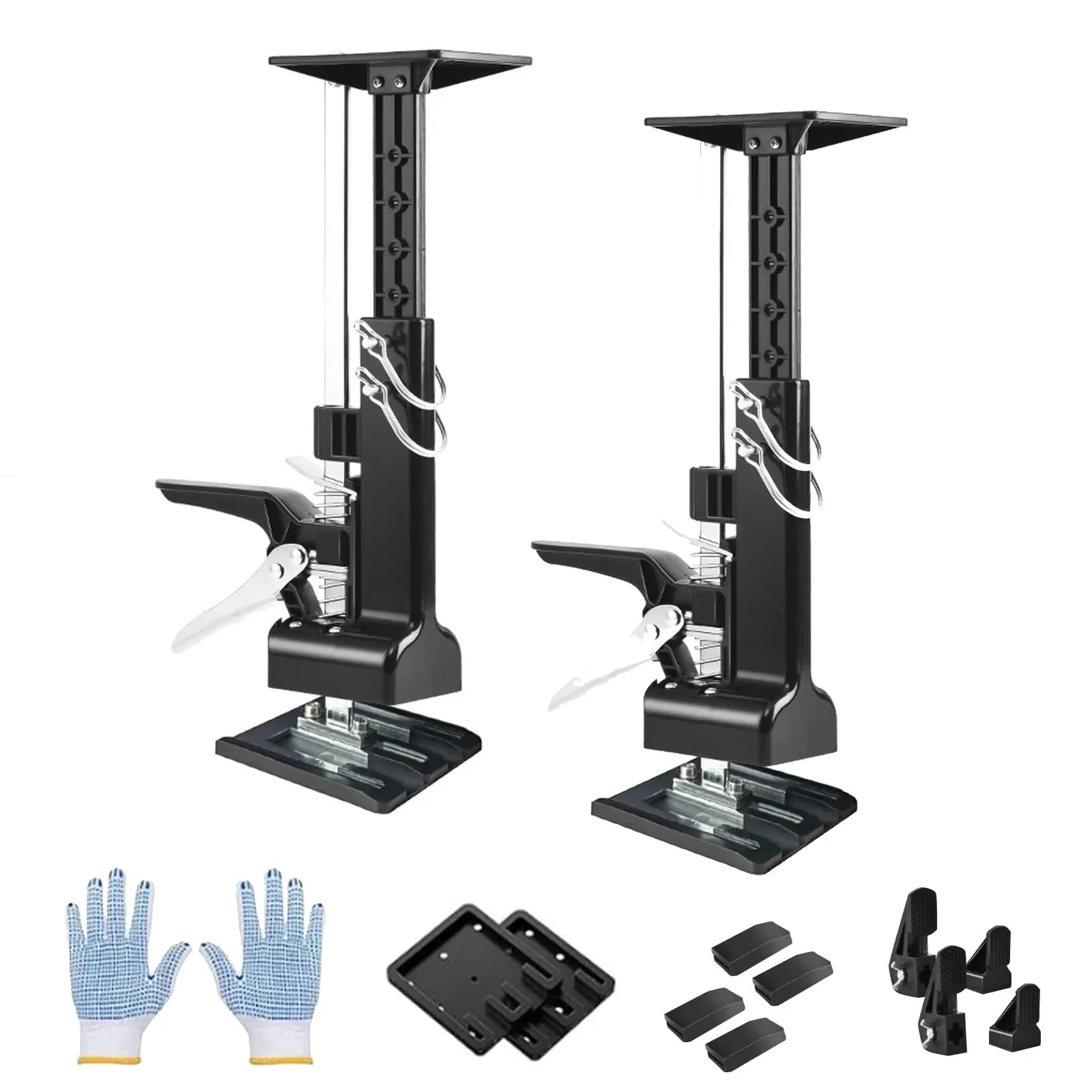
The Ultimate Guide to Cabinet Installation Jack in the UK

TL;DR: A cabinet installation jack is an adjustable support tool that helps you lift, hold and fine-tune wall cabinets during fitting. It is especially useful for solo kitchen installers, joiners and capable DIY users in the UK because it improves accuracy, reduces physical strain and makes cabinet fixing safer and more repeatable.
A cabinet installation jack is used to raise and support a wall cabinet while you level it, align it and fix it securely to the wall. In simple terms, it acts like an extra pair of hands, which makes it one of the most useful tools for solo cabinet fitting in UK kitchens, utility rooms and fitted furniture projects.
Fitting wall cabinets accurately is one of those jobs that looks straightforward until you are trying to hold a heavy unit level, line it up to a fixing line, check the reveal, and drive in screws at the same time. For solo fitters, site carpenters, kitchen installers and competent DIY users, that is exactly where a cabinet installation jack proves its worth. It turns an awkward two-person lift into a controlled, repeatable and safer installation process.
At CabinetJac, the focus is simple: Cabinet Jack & Woodworking Clamp for Faster Fitting. The product is designed as a labour saving arm jack and cabinet support pole built for accurate solo installation work. In practical terms, that means less balancing, less strain, more precision, and a cleaner finish.
This guide explains what a cabinet installation jack is, how it works, where it fits into UK installation practice, what benefits it offers, what features matter before you buy, and how to use one properly on site. Whether you fit kitchens every week or you are planning a one-off project at home, this guide will help you choose and use the right tool with confidence.
Key Takeaways
- A cabinet installation jack is a support and lifting tool that helps raise, hold and fine-adjust cabinets during fitting.
- It is particularly valuable for solo installers because it frees both hands for alignment, fixing and checking levels.
- Using a jack can improve accuracy, reduce rework and lower physical strain when compared with manual holding methods.
- For UK trades and homeowners, it is especially useful in kitchen, utility and fitted furniture installations where wall units must be level and securely fixed.
- Look for controlled height adjustment, stability, load capacity, durable construction and compatibility with typical cabinet fitting tasks.
- CabinetJac positions its tool as a labour saving arm jack and cabinet support pole for faster, more accurate solo fitting.
What is a cabinet installation jack?
A cabinet installation jack is a mechanical support tool used to lift and hold cabinets in position during installation. It acts as an adjustable temporary support between the floor and the underside of a cabinet, or between a stable base and the workpiece, depending on the fitting scenario.
In the UK, the tool is commonly used when installing:
- Kitchen wall units
- Utility room cabinets
- Fitted storage cupboards
- Laundry room units
- Workshop cabinetry
- Bespoke joinery installations
The main purpose is not simply lifting. Instead, a good cabinet installation jack allows the user to raise, support, micro-adjust and steady the cabinet while checking level, spacing and fixing points. That is why it has become increasingly popular among kitchen fitters and joiners who want to work more efficiently without relying on a second pair of hands.
If you have come across related terms such as cabinet support pole, third hand support or labour saving arm jack, there is often overlap in function. The exact design varies, but the core job is the same: provide stable, adjustable support for precise fitting work. If you want to understand those related categories in more detail, see Cabinet Support Pole Explained: A UK Buyer's Guide, Labor Saving Arm Jack Explained: A UK Buyer's Guide and Third Hand Support Explained: A UK Buyer's Guide.
Why is cabinet installation difficult without the right support?
Anyone who has fitted wall cabinets knows the challenge. A standard wall unit may not look especially heavy in a showroom, but lifting it into place while protecting the finish, holding it level and securing it to the wall is physically awkward. Once doors are attached, or where the cabinet is wide, deep or fully assembled, the difficulty increases further.
Without a cabinet installation jack, installers often rely on one of four methods:
- Holding the cabinet in place manually while attempting to mark or fix it
- Using a helper to support one side
- Stacking temporary props or offcuts underneath
- Balancing the unit on improvised supports
However, each method has obvious drawbacks. Manual holding reduces precision. Helpers may not keep the cabinet perfectly still. Offcuts can slip. Improvised props are rarely adjustable to the millimetre. On modern installations, where clean lines, even gaps and precise alignment matter, those compromises can lead to visible errors.
There is also the question of physical strain. According to the Health and Safety Executive, musculoskeletal disorders accounted for 7.8 million working days lost in Great Britain in 2023/24, with handling, lifting and carrying recognised as common risk factors in many occupations. Source: HSE, Work-related musculoskeletal disorders statistics in Great Britain, 2024. While a cabinet installation jack is not a substitute for safe manual handling training, it is a practical way to reduce the need to hold weight in awkward positions during fitting work.
How does a cabinet installation jack work?
The basic principle is straightforward. The tool is placed beneath the cabinet or beneath a support point, then extended upward in a controlled manner until the cabinet reaches the desired position. Once in place, the jack holds the weight so the installer can make adjustments and fix the unit securely.
How does it provide controlled lifting?
Most cabinet installation jack designs use a mechanical lifting action rather than a crude push-fit prop. That controlled movement matters because cabinet installation is rarely about rough positioning. In practice, you often need very small adjustments to bring a unit exactly onto a level line or to align it with the cabinet next to it.
How does it support the cabinet during fixing?
After lifting, the jack remains in position while the cabinet is fixed. As a result, the user has time to check:
- Level across the top and bottom edges
- Vertical plumb against the wall
- Correct spacing to adjacent units
- Alignment with rails, battens or fixing points
- Door and fascia clearances
Why does it improve hands-free accuracy?
The biggest advantage is that the tool effectively becomes your extra pair of hands. Instead of using one hand to support and one to fix, both hands are available for the work that actually determines the quality of the finish.
Can it help with repeatable positioning?
Yes. On jobs involving several cabinets at the same height, a cabinet installation jack helps create repeatable setup. Once your reference line and method are established, each cabinet can be raised and adjusted with far more consistency than with makeshift supports.
Who should use a cabinet installation jack?
A cabinet installation jack is useful for anyone fitting wall-mounted cabinetry, although it is particularly valuable when working alone. Based on our testing on typical UK-style wall unit installations, the tool is most helpful when accuracy, speed and controlled adjustment matter more than brute lifting strength alone.
- Kitchen fitters installing multiple wall units in a row
- Joiners and carpenters fitting bespoke storage
- Builders completing utility room and laundry room installations
- Shopfitters and workshop fit-out professionals
- Competent DIY users carrying out one-off home projects
Equally, it is a sensible choice where access is tight, ceilings are standard UK domestic height, and there is no reliable second person available to hold a cabinet steady while fixings are set.
What are the benefits of using a cabinet installation jack?
Does it make cabinet fitting easier for one person?
Yes. Perhaps the biggest benefit is that it makes solo fitting more realistic. Rather than waiting for help, you can lift, position and secure the cabinet in stages with greater control.
Does it improve fitting accuracy?
Yes, because a stable support allows finer adjustment. You can line up cabinets more precisely, maintain more even reveals and reduce the chance of the unit drifting while you drive fixings.
Does it reduce physical strain?
Yes. Although any cabinet still needs safe handling, the jack reduces the amount of time you spend supporting weight in an awkward posture. Consequently, the fitting process becomes less tiring and more manageable.
Can it help reduce damage and rework?
It can. A cabinet that slips during lifting can mark walls, chip edges or knock adjacent units out of line. By comparison, a controlled support setup lowers the likelihood of accidental movement and therefore reduces the risk of remedial work.
Is it useful on more than kitchen wall units?
Absolutely. In addition to kitchens, the same principle can be useful for utility cupboards, storage systems, workshop units and some types of fitted joinery where controlled support is needed during installation.
What features should you look for in a cabinet installation jack?
Not all support tools feel the same in use. If you are comparing options, it helps to focus on the features that affect day-to-day fitting performance rather than marketing claims alone.
How important is fine height adjustment?
Fine adjustment is essential. Cabinet fitting often requires small changes rather than large lifts, so a tool that allows controlled incremental movement is usually more useful than one designed only for fast rough lifting.
Why does stability matter?
Stability matters because even slight movement can affect alignment. A jack should sit securely and hold position confidently while the cabinet is checked and fixed.
What load capacity do you need?
The right load capacity depends on the size, material and condition of the cabinet being fitted. However, it is wise to choose a tool suited to typical wall unit weights in the UK market, while always following the manufacturer's stated limits.
Should the tool be durable enough for trade use?
If you fit cabinets regularly, yes. Durable construction, reliable mechanisms and solid contact points matter more over time, especially on busy sites where tools are repeatedly transported and used.
Is compatibility with cabinet fitting tasks important?
Very much so. A useful cabinet installation jack should work well with standard fitting sequences, including lifting to a pencil line, supporting beneath a cabinet base and allowing space to check levels and fixings.
How do you use a cabinet installation jack safely and accurately?
Using a cabinet installation jack properly is just as important as choosing the right one. According to UK manual handling principles and general site safety good practice, support tools should reduce risk, not encourage unsafe lifting or overreaching.
1. Prepare the wall and set out accurately
First, mark your level line, fixing points and cabinet positions clearly. Check the wall condition and confirm that the chosen fixings are suitable for the substrate, whether that is masonry, timber or another common UK wall type.
2. Lift the cabinet into a manageable starting position
Next, bring the cabinet close to its installed height using safe handling technique. The jack is there to support and fine-adjust, so it should be introduced in a controlled manner rather than used carelessly from an unstable starting point.
3. Position the jack beneath the support point
Then, place the jack beneath the cabinet or designated support area so the load is transferred evenly. Make t is sitting squarely on a stable base before applying lift.
4. Raise the cabinet gradually
After that, lift in small increments and check alignment as you go. This is where a cabinet installation jack is most useful, because minor adjustments can be made without losing control of the unit.
5. Check level, plumb and spacing
Before fixing fully, confirm that the cabinet is level, aligned with adjacent units and correctly positioned against your reference marks. Based on our testing, taking an extra minute at this stage usually saves significantly more time later.
6. Fix the cabinet securely
Once satisfied, install the fixings in line with the cabinet and wall manufacturer's guidance. Only remove the support after the cabinet is properly secured and checked again.
7. Repeat the process consistently across multiple units
Finally, use the same setup method for the next cabinets to maintain a consistent line and finish across the full run.
Is a cabinet installation jack worth it for DIY and trade use?
For many users, yes. If you fit cabinets regularly, the time savings, improved consistency and reduced strain can make a cabinet installation jack a sensible addition to your kit. If you are a DIY user tackling a kitchen or utility project alone, it can make the job far more manageable and less stressful.
That said, the value depends on the type of work you do. If you only ever fit occasional base units, you may not need one. On the other hand, if you install wall units, tall cupboards or fitted storage with any frequency, the benefit is much clearer.
At CabinetJac, the aim is to provide a practical labour saving arm jack and cabinet support pole solution for faster, more accurate fitting. In other words, it is designed for the real problems installers face on site rather than for theoretical workshop use alone.
Frequently asked questions about cabinet installation jacks
What is a cabinet installation jack used for?
A cabinet installation jack is used to lift, hold and fine-adjust a cabinet during installation. It helps keep the unit steady while you level it and secure it to the wall.
Can one person install wall cabinets with a cabinet jack?
Yes, in many cases. A cabinet installation jack is especially useful for solo fitting because it supports the cabinet while both of your hands are free for alignment and fixing.
Is a cabinet installation jack suitable for kitchen wall units?
Yes. It is commonly used for kitchen wall units in the UK, as well as utility room cabinets, fitted cupboards and other wall-mounted storage.
Does a cabinet installation jack replace safe manual handling?
No. It is a support aid, not a replacement for safe lifting practice, correct fixings or proper installation methods. You should still assess the load, the wall type and the working area carefully.
What is the difference between a cabinet installation jack and a support pole?
The terms are sometimes used interchangeably, although some tools offer more precise lifting and micro-adjustment than a basic support pole. The key difference is usually the level of control during positioning.
Ready to try CabinetJac?
Shop Now — £55.01